> For the complete documentation index, see [llms.txt](https://docs.eventscase.com/llms.txt). Markdown versions of documentation pages are available by appending `.md` to page URLs; this page is available as [Markdown](https://docs.eventscase.com/networking/new-meetings-system/attendee-user-journey.md).
# Attendee User Journey
In order to access the new meetings system, you (the attendee) must head to the Digital Venue of a specific event.
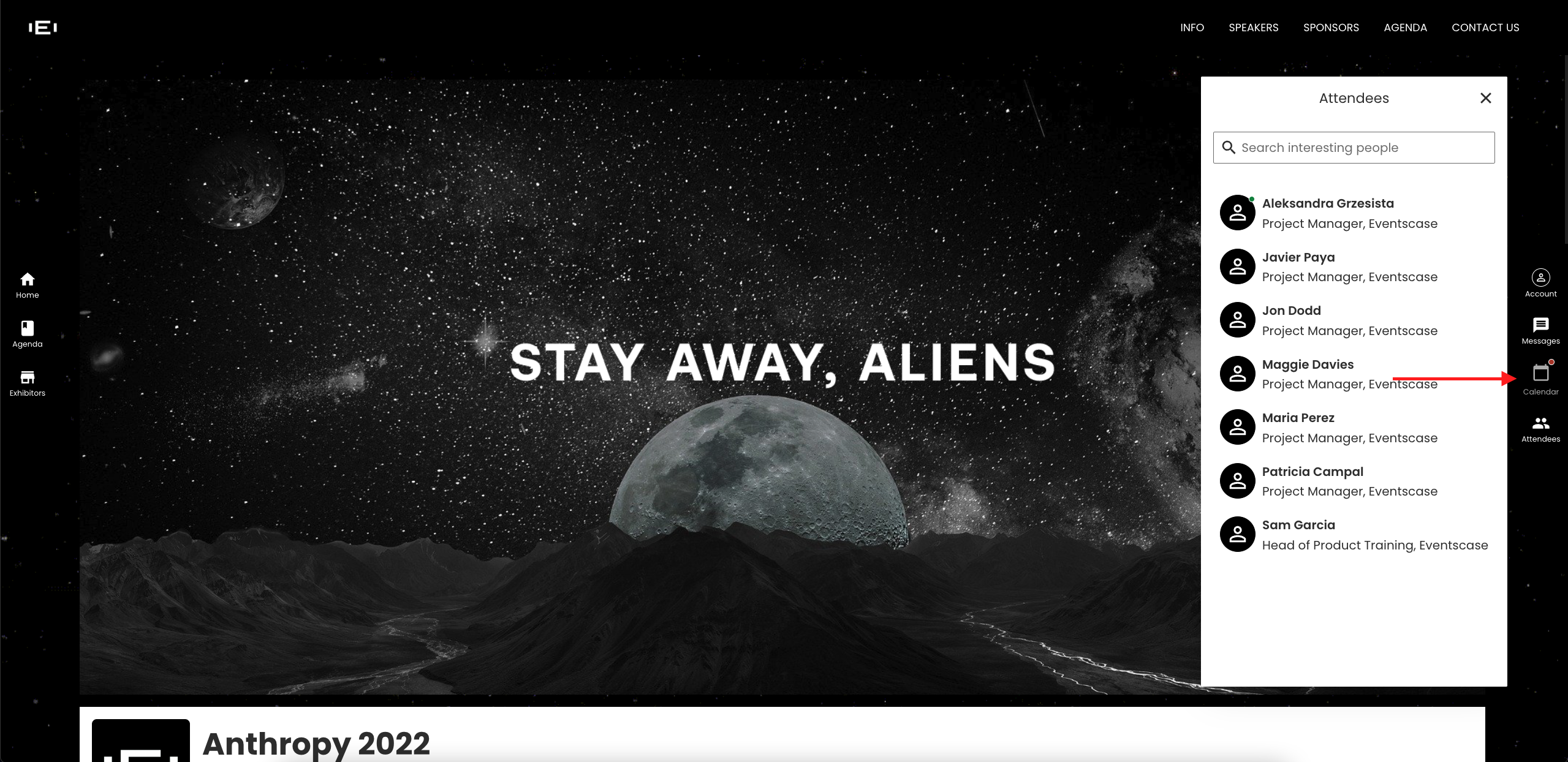
Once you're there, click on the ***Attendees*** tab on the right-hand side menu. Click on anyone you want to schedule a meeting with and, finally, click on ***Request meeting***.
This will now bring up the meeting request window where you are able to set the name of the meeting and choose the date/start time. The duration is set by the event organiser. By default, the meeting request is only sent to the attendee you have chosen but you have the opportunity to add more participants if necessary.
Depending on the spaces configured by the event organiser, you may then choose where to meet the participants (for a face-to-face meeting). You may also add an optional message before clicking on ***Save*** to finalise your request.
{% hint style="info" %}
If the event organiser has activated video calls for this particular event, a videoconferencing link will be automatically generated within the meeting request. You may then meet with the other participants virtually through the said link.
{% endhint %}
Now that you have sent a meeting request, the other meeting participants will then receive an email asking them to log into the Digital Venue to manage said requests. The email may potentially look like this:
If you got alerted of a meeting request via email, clicking on ***See more details*** (wording may vary depending on how the email is set up) will take you to the Digital Venue. You should log in first before confirming or rejecting meeting requests within the ***Calendar*** tab:
A red dot will appear if you have pending requests.
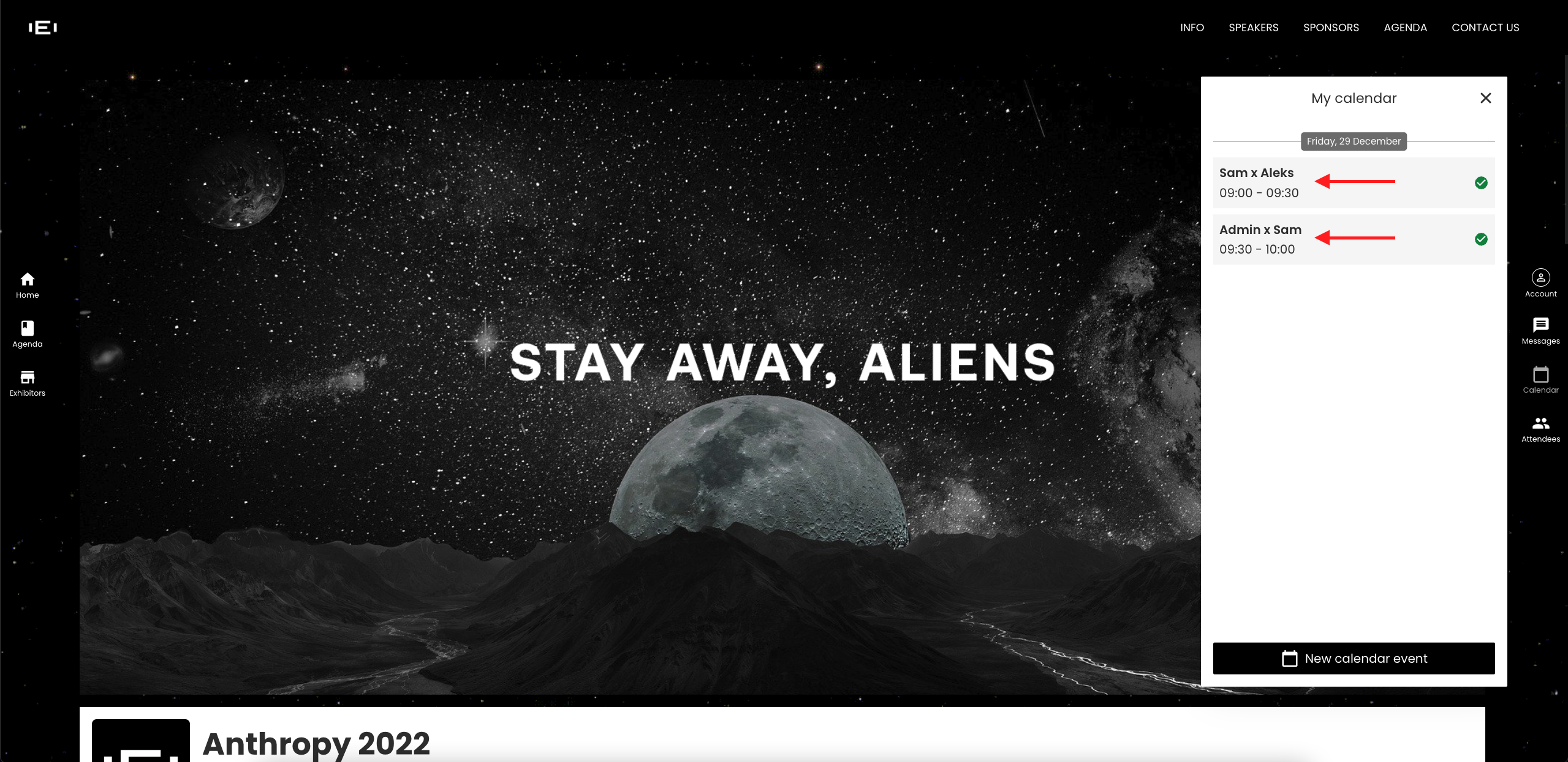
This is where you will see all meeting requests.
Clicking on a request allows you to respond Yes or No.
A confirmed meeting request will look like this on your calendar:
To view if meeting participants have accepted your meeting request, click on a specific meeting and check the response status found on top of every attendee.
A green check mark means the attendee has accepted your request. A yellow clock means it's still pending. And a red x means the attendee has rejected your request.
Accepted request
Rejected request
{% hint style="success" %}
On the day of the event, refer to your calendar on the Digital Venue and network with attendees whom you have scheduled meetings with, following the time slots and spaces you have agreed upon.
{% endhint %}